
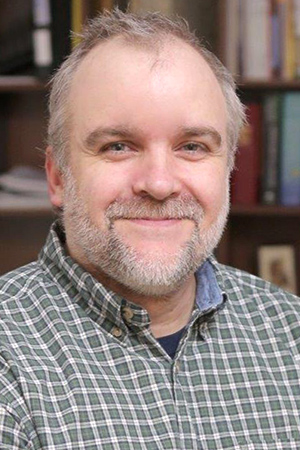
G. Vazquez, Ph.D., FAHA
 |
Program Director, MSBS-MS Associate Director, Center for Hypertension and Precision Medicine
|
Education and Training:
BSc Biochemistry, 1990, National University of the South, Argentina
PhD Biochemistry, 1997, National University of the South, Argentina
Postdoctoral Fellow, 1997, Argentinean National Research Council (CONICET)
Volkswagen Stiftung, 1997 Institut fur Pharmakologie, Freie University, Berlin, Germany.
Postdoctoral Fellow, 2001-2005: NIEHS, North Carolina, USA
Research Fellow, 2006: NIEHS, North Carolina, USA
Appointments:
- Program Director, MSBS-Medical Sciences Program, The University of Toledo College of Medicine, HSC, Toledo OH. 2017-present.
- Professor (with tenure), Department of Physiology & Pharmacology, The University of Toledo College of Medicine, HSC, Toledo OH. 2018-present.
- Associate Professor (with tenure), Department of Physiology & Pharmacology, University of Toledo College of Medicine, HSC, Toledo OH. 2017-2018.
- Associate Professor, Department of Physiology & Pharmacology, University of Toledo College of Medicine, HSC, Toledo, OH. 2012-2017.
- Associate Director, Center for Hypertension & Personalized Medicine, University of Toledo 2015-present.
- Assistant Professor, Department of Physiology & Pharmacology, University of Toledo College of Medicine, HSC, Toledo, OH. 2007-2012.
- Visiting Research Fellow, Calcium Regulation Group, Laboratory of Signal Transduction, National Institute of Environmental Health Sciences, North Carolina 2006-2007.
- Visiting Postdoctoral Fellow, Calcium Regulation Group, Laboratory of Signal Transduction, National Institute of Environmental Health Sciences, North Carolina 2001-2005.
- Member of the Scientific and Technological Researcher Career, CONICET, Argentina 1997-2004.
Research interests:
Research in Dr. Vazquez’s lab is focused on the role of non-selective cation channels,
such as Transient Receptor Potential Canonical (TRPC) channels and nicotinic acetylcholine
receptors, in molecular and cellular events of atherosclerosis. Atherosclerosis is
a disease of the arterial wall with a dominant and maladaptive inflammatory response,
and represents the leading cause of death in western societies, remaining as the main
vascular complication of metabolic diseases such as diabetes, obesity and metabolic
syndrome. Our group has recently discovered that endothelial TRPC3 channels are an
obligatory component of the signaling underlying regulated expression of cell adhesion
molecules and macrophage recruitment to endothelium, two critical events throughout
all stages of atherosclerotic lesion development. We have also discovered a novel
nicotinic acetylcholine receptor-dependent survival pathway in coronary endothelium.
More recently, our lab has shown that TRPC3, through a mechanism not yet defined,
is critical for macrophage survival and efferocytosis. To study this, our lab makes
use of in vitro (primary and immortalized cell lines) and in vivo (global and conditional
transgenic and knockout mice; bone marrow transplantation) models of endothelial and
macrophage dysfunction, and a number of techniques (including patch-clamp electrophysiology,
real-time camera-based fluorescence imaging, real-time amperometry, protein chemistry/molecular
biology, morphometric and immunohistochemical analysis of atherosclerotic lesions
in mice).
Awards and Commendations:
2017: Dean's Award for Mentoring, University of Toledo
2016: Finalist, Medical Research Society Award, University of Toledo
2016: Department Service Award, Department of Physiology and Pharmacology, University of Toledo
2015: Diversity Ambassador, University of Toledo
2014: Diversity Ambassador, University of Toledo
2011: Leadership Award, Student Research Forum, Department of Physiology & Pharmacology, University of Toledo
2011: Productivity Award, University of Toledo
2011: Dean’s Award for Research to New Investigator, University of Toledo
2002: Argentinean Association of Osteology and Mineral Metabolism Award, Argentinean Association of Osteology and Mineral Metabolism, Buenos Aires, Argentina.
2000: Hugo Pumarino Carte Award, Iberoamerican Society of Osteology and Mineral Metabolism, Buenos Aires, Argentina.
Mentoring:
Honorary Member, Graduate Program on Biochemistry and Pharmacology, National University
of the South, Argentina.
Graduate Faculty member, Molecular Medicine (MOME) track, University of Toledo College
of Medicine and Life Sciences.
National and International Professional Societies and Activities:
- American Heart Association, Premium Professional Member, 2006-ongoing.
- Council on Arteriosclerosis, Thrombosis & Vascular Biology, Professional Member, 2006-ongoing.
- Council on Basic Cardiovascular Sciences, Professional Member, 2006-ongoing.
- American Society for Pharmacology & Experimental Therapeutics, Professional Member, 2008-ongoing.
- Network of Minority Research Investigators, NIDDK, Professional Member, 2008-ongoing.
- Ohio Physiological Society, Professional Member, 2012-ongoing.
- Abstract reviewer, ATVB Council, AHA meeting, 2013-ongoing.
- American Physiological Society, Professional Member, 2015-ongoing.
Service to Professional Societies:
- Membership committee, Network of Minority Research Investigators, NIDDK, 2008-2010.
- Reviewer, Basic Cardiovascular Sciences Council, AHA, 2012.
- Reviewer, ATVB Council, AHA, 2013-ongoing.
- Cardiovascular Section, American Physiological Society.
- Cell and Molecular Physiology Section, American Physiological Society.