


Faculty and Their Research Interests in Cancer Biology
Click on the faculty member’s name below for a more in-depth description of their research and publications.
DEPARTMENT OF CANCER BIOLOGY
|
|
Ivana De La Serna, Ph.D.Associate Professor In eukaryotes, DNA is packaged into chromatin, the basic unit of which is the nucleosome. Chromatin structure plays a critical role in the regulation of gene expression by imposing topological constraints and by creating a barrier for general transcription factors and other regulators. Dr. de la Serna studies the functional role of mammalian SWI/SNF chromatin-remodeling enzymes in the regulation of gene expression during melanocyte differentiation and to determine how SWI/SNF function is de-regulated in melanoma. The effects of DNA damage and repair pathways on chromatin remodeling are also under investigation. |
|
|
Kathryn Eisenmann, Ph.D.Professor Research Focus #1Understanding the role of Dia-interacting protein (DIP) in modification of the cellular actin cytoskeleton and amoeboid cell movement is providing novel insights of mechanisms controlling the transition towards cell migration/invasion and metastasis by cancer cells. Dr. Eisenman's lab is using recent findings to further probe amoeboid conversion in response to CXCL12 chemokine signaling with the goal of providing novel molecular targets for alternate therapeutic avenues. Research Focus #2At the heart of the extreme lethality of glioblastoma (GBM) is an aggressive capacity to invade into surrounding healthy tissue. Rho GTPases coordinate actin dynamics to support GBM invasion, but little is known about their downstream effectors, the mDia formins, to GBM invasion. Using small molecules that directly inhibit mDia-midiated f-actin assembly, the Eisenmann lab is exploring the role of mDia formins in GBM invasion. They have recently uncovered a role in GBM cell motility and identified a possible anti-invasive therapeutic strategy for GBM. Research Focus #3Epithelial ovarian cancer (EOC) is a deadly disease often detected after it has metastasized within the peritoneal cavity. Multi-cellular spheroids are enriched in the ascites of EOC patients and they represent an invasive and chemoresistant cellular population fundamental to metastatic dissemination. The molecular mechanism triggering single cell invasive egress from spheroids has remained enigmatic, but the Eisenmann lab has recently discovered that multiple GTPase effectors must be suppressed to fully block invasive egress from ovarian cancer spheroids. These results indicate a possible therapeutic anti-invasive avenue for targeting these multicellular structures. |
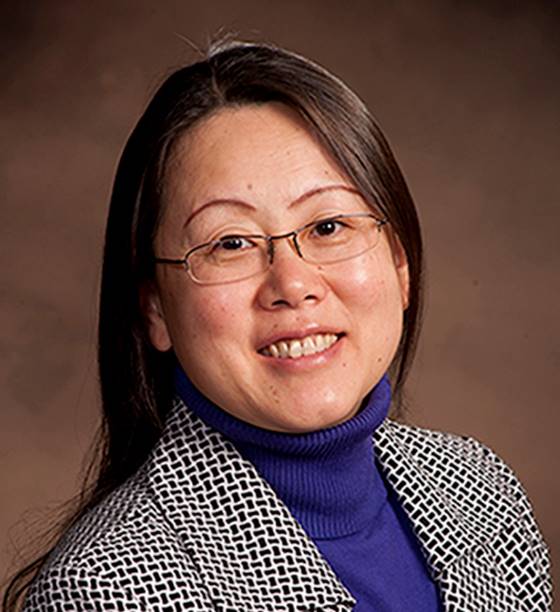 |
Xiaohong Li, Ph.D.Associate Professor |
|
|
Shi-He Liu, M.D.Associate Professor Therapies for pancreatic cancer are largely hindered by the lack of an effective delivery system. Applied nanotechnology has been revolutionized in the field of cancer therapeutics with immense potential owing to recent advancements in nanoparticles (NPs) based drug/small molecular delivery systems. Dr Liu’s lab is focusing on nanodelivery system, utilizing state-of-the art technologies to develop an innovative smart exosome nanocarrier that would be able to overcome obstacles currently preventing the effective application of nanodelivery technology in the field of cancer biology. The research advances a safe, efficient, and stable nanodelivery system that actively targets pancreatic cancer and minimalizes the clearance by mononuclear phagocytic system (MPS). Integration of previous studies in early detection and therapies for pancreatic cancer, Dr Liu’s lab is going to utilize the novel delivery system to deliver super sensitive diagnostic biomarker for early detection of pancreatic cancer; and deliver a combination of FDA approved drugs (simvastatin, digoxin and metformin) for BIRC5 targeted therapy for pancreatic cancer. The projects hold tremendous translational potential for cancer diagnosis and therapy. |
|
|
Dayanidhi Raman, B.V.Sc., Ph.D.Associate Professor Dr. Raman’s research group is focused on cell signaling, migration, local invasion and metastasis mediated by chemokine receptors CXCR2 and CXCR4 in breast cancer. Chemokine receptors are used for many normal cellular functions, however they are subverted in the tumor microenvironment to facilitate tumor progression and metastasis. His lab is currently working on elucidating the role of CXCR4 in controlling regulatory aspects of breast cancer cells. These processes are mediated through an adaptor protein called LIM and SH3 Protein 1 (LASP-1) by ligand activated CXCR4. The Raman lab has identified several key proteins that bind to nuclear LASP-1 in response to activation of CXCR4 by CXCL12 in breast cancer cells. Importantly, they have discovered that nuclear localized LASP-1 correlates inversely with patient long-term survival. |
|
|
Qin Yang, Ph.D.Professor |
|
|
Kam C. Yeung, Ph.D.Associate Professor Raf kinase inhibitor protein (RKIP) is a novel metastasis suppressor gene in and its expression is diminished in breast cancer metastases. Restoring RKIP expression is sufficient to inhibit cancer metastasis in experimental mouse models suggesting RKIP can function alone to regulate metastasis. One current focus of the Yeung lab is to define the mechanisms through which loss of RKIP promotes metastasis and determine the clinical validity of findings using human breast cancer tissues. An additional project is under investigation because the Yeung lab has observed that the expression of RKIP correlates with oncogenic activation of the PI3K and Ras/Raf pathways. Importantly, germ-line deletion of RKIP increases incidence of prostate cancer and promotes metastasis in a transgenic mouse model driven by PI3K and Ras/Raf mutations. Another area of investigation focuses on elucidating the function of micro-non-coding RNAs (miRNAs) in the malignant transformation of melanocytes into melanoma. High-throughput-sequencing of cancer genomes has identified oncogenic mutations in BRaf genetic locus as one of the critical events in melanomagenesis. Recent in vitro results in the Yeung lab suggest that miR-10b is an important mediator of oncogenic BRafV600E activity in melanoma. To better define the role of miR-10b, they will continue to investigate add-in and knock-down effect of miR-10b on melanoma in mouse models, clinical nevus and melanoma samples. |
|
|
Jian-Ting Zhang, Ph.D.Professor and Chair, Dept. of Cell and Cancer Biology |
|
|
Yue Zou, Ph.D.Professor Research in Dr. Zou's lab focuses on understanding the molecular mechanisms of genome instability and DNA damage responses (DDR) such as DNA repair, DNA damage checkpoint signaling, and cell death, related to cancer, premature aging, and other diseases. Genome instability is the major cause of human cancer. As a cellular defense system, DNA repair recognizes and removes DNA lesions, while activation of DNA damage checkpoints leads to the arrest of cell cycle progression, allowing sufficient time for DNA repair to remove the damage before the damage could cause permanent changes in the genome. In the case of severe DNA damage, apoptosis is activated and plays a crucial role in protecting genome stability and preventing carcinogenesis by selectively eliminating irreparable cells from cell populations.
|




Department of Medicine
|
|
James C. Willey, M.D.Professor of Medicine and Pathology Dr. Willey’s research group studies the expression of multiple genes simultaneously by quantitative, competitive RT-PCR in normal and tumor respiratory epithelial and alveolar macrophage cells. These studies have provided a molecular signature that allows for a prediction of how aggressive a tumor may become. His specific current research interests using this quantitative technique are::
|
|
|
Jing-Yuan Liu, Ph.D.Associate Professor of Medicine & Bioengineering Dr. Liu's lab is interested in understanding the principles of physical interactions between proteins and between protein-small molecules using multidisciplinary approaches such as computational biology and bioinformatics, X-Ray Crystallography and molecular biology. Protein-protein interactions are required for biological functions while small compound that interacts with protein can alter, regulate or trigger protein functions. The ultimate goal of their research is to design better drugs for cancer therapy. |


DEPARTMENT OF UROLOGY
|
|
Nagalakshmi Nadiminty, Ph.D.Associate Professor Current research in Dr. Nadiminty's lab focusses on the molecular mechanisms of cancer
development and progression in urologic malignancies. Urologic malignancies such as
prostate and bladder cancers account for significant mortality and morbidity as well
as health care related expenses in the U.S. |