


Faculty Research: Lirim Shemshedini
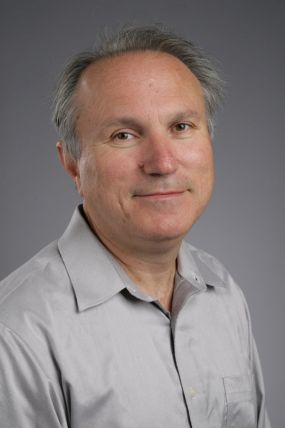
Professor
Ph.D., University of Vermont, 1989
B.S., University of Michigan
Office: WO 3227
Phone No: 419.530.1553
Email: lirim.shemshedini@utoledo.edu
Research Areas: Cancer; Cell Architecture and Dynamics; Cell Signaling.
Research
 My lab studies the role of androgen receptor (AR) in prostate cancer. One part of
this work has focused on proteins regulating the activity of AR and this led to the
identification AP-1 components and p53 as important regulators of AR activity. Our
lab was the first lab to demonstrate that c-Jun acts as a coactivator for AR and is
an important mediator of AR regulation of genes and cell proliferation. We also were
the first to identify a novel activity for p53, that of a repressor of AR transcriptional
activity. Indeed, we showed that c-Jun and p53 antagonize each other’s activity on
AR, with c-Jun promoting AR dimerization and DNA binding and p53 inhibiting both processes.
Our studies with c-Jun activity on AR led us to the second major part of our group’s
research efforts, the identification of novel AR-regulated genes. Among these was
sGCα1, a gene encoding a subunit of sGC (Soluble Guanylyl Cyclase), the receptor for
nitric oxide (NO) catalyzing cGMP synthesis. Our data showed for the first time that
sGCα1 has promoting functions in prostate cancer independent of NO signaling. Indeed,
we clearly showed that sGCα1 over-expression was sufficient to promote the growth
and survival of prostate cancer cells that is observed in the presence of androgen,
making sGCα1 a key androgen-regulated gene in prostate cancer. In view of this, our
lab has generated a number of peptides that target sGCα1 and kill prostate cancer
cells. Indeed, these peptides provide a new paradigm for prostate cancer therapy.
In addition, we published a novel function of sGCα1, that of inhibiting p53 activity,
and thus providing the prostate cancer and increased ability to evade p53-dependent
apoptosis. This work led our lab to discover of new protein complex, consisting of
sGCα1, p53, Casein Kinase 2, and components of the COP9 Signalosome, which has pro-growth
and pro-survival functions in prostate cancer. Finally, we identified the gene encoding
the transmembrane protein TM4SF3, also known as Tetraspanin 8, as novel androgen-regulated
gene. Interestingly, our studies determined that this transmembrane protein also exhibits
a nuclear localization in prostate cancer cells, and associates with AR to form a
mutually stabilizing complex. This represents the identification of a novel AR-interacting
protein that is important for AR protein stability in prostate cancer.
My lab studies the role of androgen receptor (AR) in prostate cancer. One part of
this work has focused on proteins regulating the activity of AR and this led to the
identification AP-1 components and p53 as important regulators of AR activity. Our
lab was the first lab to demonstrate that c-Jun acts as a coactivator for AR and is
an important mediator of AR regulation of genes and cell proliferation. We also were
the first to identify a novel activity for p53, that of a repressor of AR transcriptional
activity. Indeed, we showed that c-Jun and p53 antagonize each other’s activity on
AR, with c-Jun promoting AR dimerization and DNA binding and p53 inhibiting both processes.
Our studies with c-Jun activity on AR led us to the second major part of our group’s
research efforts, the identification of novel AR-regulated genes. Among these was
sGCα1, a gene encoding a subunit of sGC (Soluble Guanylyl Cyclase), the receptor for
nitric oxide (NO) catalyzing cGMP synthesis. Our data showed for the first time that
sGCα1 has promoting functions in prostate cancer independent of NO signaling. Indeed,
we clearly showed that sGCα1 over-expression was sufficient to promote the growth
and survival of prostate cancer cells that is observed in the presence of androgen,
making sGCα1 a key androgen-regulated gene in prostate cancer. In view of this, our
lab has generated a number of peptides that target sGCα1 and kill prostate cancer
cells. Indeed, these peptides provide a new paradigm for prostate cancer therapy.
In addition, we published a novel function of sGCα1, that of inhibiting p53 activity,
and thus providing the prostate cancer and increased ability to evade p53-dependent
apoptosis. This work led our lab to discover of new protein complex, consisting of
sGCα1, p53, Casein Kinase 2, and components of the COP9 Signalosome, which has pro-growth
and pro-survival functions in prostate cancer. Finally, we identified the gene encoding
the transmembrane protein TM4SF3, also known as Tetraspanin 8, as novel androgen-regulated
gene. Interestingly, our studies determined that this transmembrane protein also exhibits
a nuclear localization in prostate cancer cells, and associates with AR to form a
mutually stabilizing complex. This represents the identification of a novel AR-interacting
protein that is important for AR protein stability in prostate cancer.
Current laboratory grants
University of Toledo Biomedical Research Innovation Grant