


Harmful Algal Blooms, Water & Human Health
Harmful algal blooms (HABs) can affect people, animals and communities that live, work and recreate around our lakes and waterways. University of Toledo physicians and scientists are working with regional and national partners to understand these health effects, reduce exposure, help healthcare professionals recognize potential HAB-associated illness, and engage Northwest Ohio residents directly in ongoing research.
Explore Water & Human Health Resources:
Understanding Harmful Algal Blooms and Your Health
With harmful algal bloom season underway in western Lake Erie, physicians and scientists at The University of Toledo have released two new public service videos designed to help residents and healthcare professionals better understand the potential human-health effects of harmful algal blooms (HAB).
The videos were developed by Dr. David Kennedy, Professor of Medicine and Co-Director of the Great Lakes Center for Fresh Waters and Human Health, Dr. Steven Haller, Professor of Medicine and Director of the Jacobson Center for Clinical and Translational Research, Dr. Joan Duggan, Professor of Medicine and adult infectious disease specialist; and, Dr. Deepa Mukundan, Professor and Chair of the Department of Pediatrics and pediatric infectious disease specialist.
For the Public
Harmful algal blooms can produce toxins that affect people and animals. Avoid water that appears discolored, scummy or unusually green, follow posted advisories, and keep children and pets away from suspected blooms. If you become ill after spending time near affected water, contact a healthcare professional and report your symptoms to your local health department.
When in doubt, stay out.
Resources:
For Healthcare Professionals
Symptoms associated with harmful algal bloom exposure can resemble common gastrointestinal, respiratory and skin conditions. Healthcare professionals should consider recent exposure to lakes, rivers or other waterways when evaluating patients with unexplained symptoms.
Report suspected harmful algal bloom-associated illness to your local or state health department. These reports support state and national tracking through the CDC’s One Health Harmful Algal Bloom System.
Resources:
Current Lake Erie Conditions
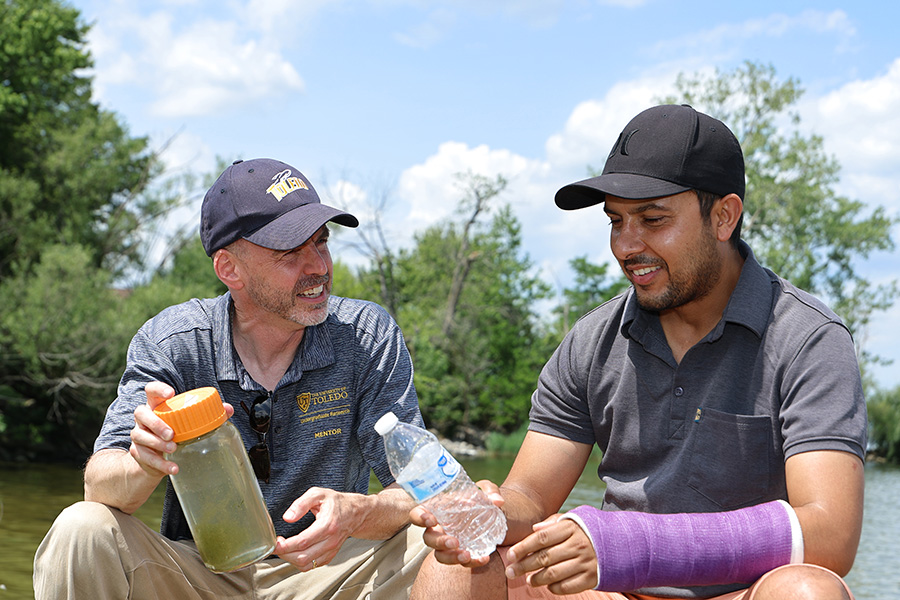
Before swimming, boating, fishing or spending time near Lake Erie, check current conditions and public health advisories:
Participate in Research: Join the GLAMR Study
Northwest Ohio residents may be eligible to participate in our ongoing community health study
The University of Toledo is recruiting Northwest Ohio residents for the Great Lakes Aerosol Monitoring Research (GLAMR Study). Researchers are investigating whether toxins associated with harmful algal blooms can enter the body through the air we breathe and affect human health.
People who live, work or spend time near Lake Erie in Lucas, Ottawa or Sandusky counties may be eligible to participate.
Our Research on Water & Human Health
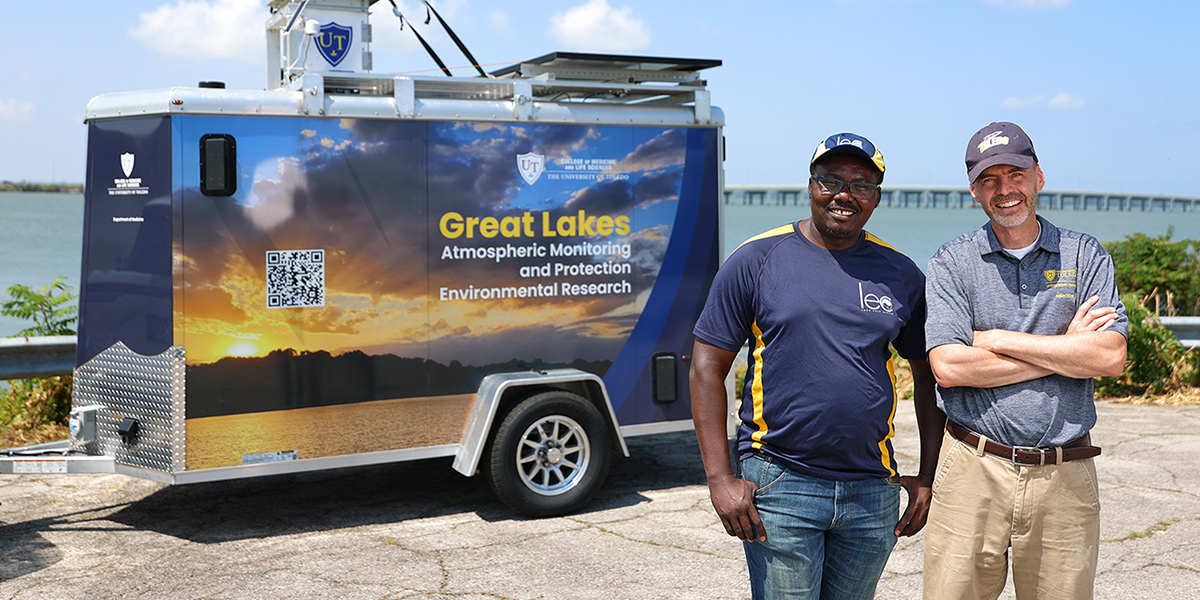
The University of Toledo is a partner in the Great Lakes Center for Fresh Waters and Human Health, a collaborative research center studying the connections between harmful algal blooms, environmental exposures and human health.
UToledo researchers are examining how toxins associated with harmful algal blooms move through water and air, how people may be exposed, and what those exposures could mean for the health of Great Lakes communities.
Pictured: Dr. Kennedy Doro and Dr. David Kennedy analyze water, air and soil in and around Lake Erie to understand how changing soil conditions may influence the release and spread of airborne algal toxins. Read more in UToledo News.
Videos
Experts at The University of Toledo are engaged in research aimed at mitigating the impact of harmful algal blooms and understanding the risks they pose to human health.
Watch Dr. Steven Haller and Jennifer Gilmore discuss the study aimed at determining the health effects of airborne algal toxins.
Why Participate in Research?
By participating in research, community members can help scientists better understand environmental exposures and develop strategies to protect public health. Studies such as GLAMR depend on volunteers to advance knowledge that may benefit communities across the Great Lakes region.