


Endri Karaj, Ph.D.
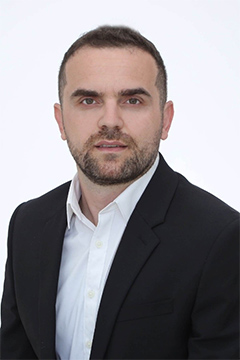
Bio
Dr. Endri Karaj was born in Elbasan, Albania, and grew up in Ancient Olympia, Greece. He began his scientific training at the University of Patras, where he earned a five-year degree in Pharmacy as valedictorian in 2017, establishing a strong foundation in pharmaceutical sciences and drug discovery.
He subsequently pursued doctoral studies in the Department of Medicinal and Biological Chemistry at the University of Toledo, specializing in organic synthesis and chemical biology. After completing his Ph.D. in 2022, Dr. Karaj joined the Broad Institute of MIT and Harvard as a postdoctoral associate, where he developed innovative platforms for induced-proximity-based therapeutic modalities. His research achievements were recognized with an NIH K99/R00 Pathway to Independence Award.
Dr. Karaj's independent research program operates at the intersection of synthetic organic chemistry, medicinal chemistry, and chemical biology, with the overarching goal of expanding the boundaries of the druggable proteome and transcriptome. His laboratory develops innovative small-molecule strategies to selectively manipulate the function and stability of disease-relevant proteins and RNA molecules, particularly those traditionally considered challenging to target.
The Karaj Laboratory focuses on developing induced proximity strategies to precisely control protein function by harnessing endogenous effector proteins. These approaches encompass targeted protein degradation through E3 ubiquitin ligase recruitment, as well as proximity-driven modalities that modulate protein activity independently of post-translational modifications. Extending this framework to RNA biology, the laboratory develops RNA-targeting chimeras that recruit endogenous RNA-processing machinery to selectively regulate RNA stability, translation, splicing, and subcellular localization.
The Karaj Laboratory also advances the rational design of covalent small molecules to achieve selective and durable modulation of protein function. By integrating principles of physical organic chemistry, medicinal chemistry, and protein biology, the group develops innovative chemical strategies to selectively engage cysteine and other amino acid residues, including lysine, histidine, and tyrosine, thereby expanding the scope of covalent ligand discovery and creating new opportunities for therapeutic intervention.
Together, these research directions aim to establish next-generation chemical technologies that overcome longstanding challenges in drug discovery and enable new opportunities for precision therapeutics.
area of research
Chemical Biology and Drug Discovery
Training and education
2022-2026: Postdoctoral Associate, Broad Institute of MIT and Harvard, Cambridge, MA, USA.
2017-2022: Ph.D., Medicinal and Biological Chemistry, University of Toledo, OH, USA.
2012-2017: Bachelor of Science in pharmaceutical sciences, University of Patras, Greece.