


Our Observatories
The Helen & Elgin Brooks Observatory
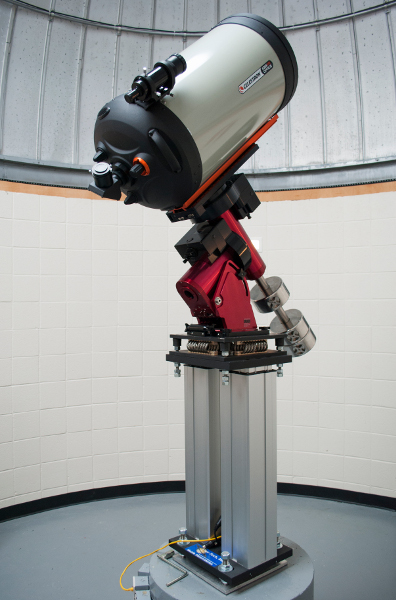
The Helen and Elgin Brooks Observatory is located on the roof of McMaster Hall adjacent to Ritter Planetarium-Observatory. The facility opened in 1987 and is dedicated to undergraduate education and public outreach. In 2015 the historic Brashear refractor was retired and replaced with a new Celestron 14 Edge HD telescope mounted on a Paramount robotic mount under the 16 foot Ash dome. The facility also houses several small portable telescopes.
The observatory is open the general public nearly every clear Friday night after our planetarium programs. It is also open for special events throughout the year. Undergraduate students in both lecture and lab classes routinely visit the facility. In the near future we will be developing a K-12 evening observing program for area schools.
The Ritter Observatory
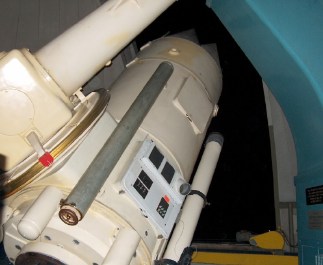
Ritter Observatory was built in 1967 and houses a 1-meter Ritchey-Chretien reflecting telescope. It is the largest optical telescope in Ohio East of the Mississippi. Instrumentation including a low/moderate resolution spectrograph, a high-resolution echelle spectrograph, and two CCD cameras are used in conjunction with the telescope.
The observatory is used mainly by department faculty, graduate and undergraduate students for research, however, on the first Friday of every month, after the evening planetarium program, the telescope is open to the public and is available for viewing the sky, weather permitting.