


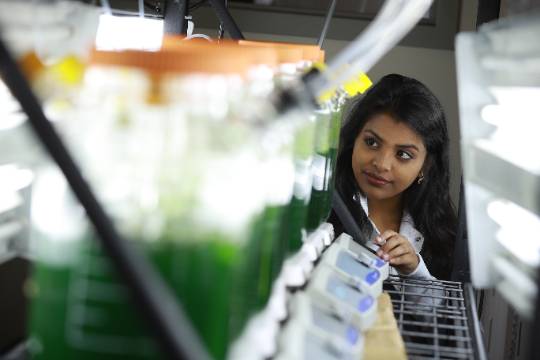
Saturday Morning Science Spring 2026
This spring we will be exploring a diverse range of scientific topics - there's something for everyone. Whether you join us for one lecture or the entire series, you're sure to discover something new. R.S.V.P. for Lectures is appreciated but not required.
R.S.V.P. to Saturday Morning Science Spring 2026
Saturday, February 14, 2026
 "Do Sperm Cells Nod Their Heads?"
Dr. Tomer Avidor-Reiss, Professor, Department of Molecular, Cellular and Developmental Biology, UToledo
A fundamental question in cell and developmental biology, with clinical, agricultural, and scientific implications for animal reproduction, is: How does the embryo inherit its subcellular structures from the gametes and develop into a healthy offspring? Additionally, can this inheritance mechanism provide insight into the diagnosis and treatment of infertility? We know that each parent provides the embryo with half of its DNA, while the mother supplies mitochondria and most other subcellular components. However, the origin and function of the embryo's centrioles, a subcellular structure that, in somatic cells, helps organize the cytoskeleton and facilitate cell division, remain much less clear. In this seminar, I will demonstrate that studies with the fruit fly (Drosophila melanogaster) have led to the discovery of atypical centrioles in human spermatozoa and embryos. Spermatozoa centrioles are the origin of the embryonic centrioles. These atypical centrioles evolve in species with internal fertilization and have novel functions, mediating the kinking (also can be referred to as nodding) of the spermatozoa head in mammalian sperm. Sperm centrioles are also promising new biomarkers for infertility diagnosis, and their evolution may provide insight for future treatment of centriole-based infertility.
R.S.V.P. for February 14, 2026
Saturday, February 21, 2026
"Weaving Science and Style: The Chemistry of Fashion and Textile"
Marissa Stevenson, Associate Conservator of Textile-Based Collections, The Toledo Museum of Art
When textiles go under the microscope, a hidden world is revealed. Every silk fiber, metallic embroidery, and glass bead holds clues to the past in their chemical composition, morphology, and structure. In this talk, textile conservator Marissa Stevenson will take you inside the Toledo Museum of Art's conservation lab to show the scientific methods that illuminate the history and innovation of what we wear and create. Through analytical techniques, like X-ray fluorescence and fiber microscopy, and chemical testing, art conservators decode puzzles that reveal trade secrets, material origins and composition, authenticity, and centuries of discovery that inform how we repair and care for our treasures for future generations. Fashion and textiles is just chemistry in couture. Join us to see how science helps us preserve not just what we see, but how we once created, adorned, and imagined ourselves.
R.S.V.P. for February 21, 2026
Saturday, March 21, 2026
 "Monitoring Air Quality by Citizens: the use of small, low-cost sensors"
Dr. Kevin Czajkowski, Professor, Department of Geography and Planning, UToledo
Dr. Czajkowski's research interests are diverse and all revolve around geospatial
technologies. His lab uses GIS and remote sensing technologies to assess sources of
non-point source pollution in the Maumee River Watershed and Lake Erie through the
Maumee River GIS and the Lake Erie Center.
R.S.V.P. for March 21, 2026
Saturday, April 11, 2026
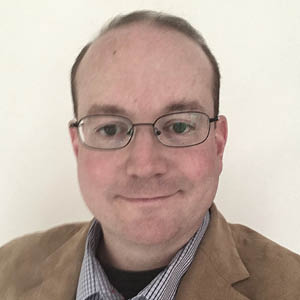 "Science Behind Night Vision and Infrared Imaging"
Dr. Nikolas Podraza, Professor and Chair, Department of Physics and Astronomy, UToledo
Humans see the light in a relatively small range of colors or wavelengths. The ability to have "night vision" or "to see in the dark" uses semiconductor devices to detect wavelengths of light in the infrared—sometimes only slightly outside the range that our eyes can see or far beyond the visible spectrum. This ability has been used in safety, security, firefighting, energy efficiency, and military applications. Physical principles behind light and how we will detect it will be discussed for two different technologies, low light amplifiers and infrared sensing microbolometers.
Saturday, April 18, 2026
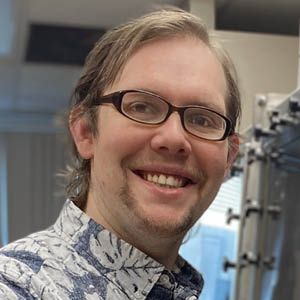 "Green Drug Synthesis - The Science of Making Informed Manufacturing Decisions"
Dr. Michael Young, Associate Professor, Department of Chemistry and Biochemistry, UToledo
The pharmaceutical industry is the least efficient in the chemical industry by a large margin. This is not because of any specific fault of the industry, but is driven by the complexities of multi-step synthesis of therapeutic molecules. Through the lens of green and sustainable chemistry, the industry is working on decreasing its environmental footprint, as well as improving the bottom line. We will discuss several cases where the pharmaceutical industry has found opportunities to streamline their processes, and why the green in green chemistry is often related to financial gain. We will complete the talk by discussing efforts by UToledo chemists to contribute to this area.
Programs are FREE and begin at 10 a.m. in Wolfe Hall Room 1205 (unless otherwise noted) on Main Campus!
NOTE: Free parking is available in Area/Lot 13 from 9:30 a.m. until noon. (Disability, metered, patient and reserved spaces are enforced 24/7 and will not
be suspended. All vehicles must be parked in designated lined parking spaces to avoid violations.)
Map: utoledo.edu/campus/directions/pdfs/Main-Campus-Map.pdf.
Organizer: Dr. Michal Marszewski (Department of Chemistry & Biochemistry)
Questions? Please contact Dr. Marszewski at michal.marszewski@utoledo.edu
Sponsored by the College of Natural Sciences and Mathematics Office of the Dean.
A very nice testimonial to the Spring 2023 Saturday Morning Science program was shared with us via email:
“Good morning. I just wanted to let you know that I attended all three of the lectures this spring and each one was excellent. I appreciate the diversity of the lectures as well as the quality. The bagels and juice are also a nice treat. I am sad that these are only offered in the spring. I would come every Saturday if you these were available. Thank you so very much for putting this together and I look forward to upcoming lectures.” – C.C.