


EcoLab: Solve the Water Crisis Summer Camp
FREE Summer STEM Camp for Students in Grades 7-12
Can you save the water supply before time runs out?
In this free, hands-on environmental science camp, students will work as a team of scientists to investigate a simulated water crisis threatening a local community. Throughout the camp, students will collect evidence, analyze water samples, solve puzzles, unlock clues and test solutions as they race against the clock to restore safe water and a healthy ecosystem.
Part environmental science lab, part escape room challenge. EcoLab combines real scientific techniques with teamwork, critical thinking and problem-solving. See the full agenda below!
Registration
Spots are limited and fill up quickly. Don’t miss your chance to turn curiosity into action this summer.
Camp is full for summer 2026.
Camp Details:
- Dates: Thursday and Friday, July 30–31, 2026
- Times:
Thursday, July 30, 9:30 a.m.-2:30 p.m. (check-in at 9 a.m.)
Friday, July 31, 9:30 a.m.-12 p.m. (check-in at 9:15 a.m.) - Cost: FREE
- Location: Wolfe Hall, The University of Toledo
We hope to see you on campus - ready to explore, experiment and have some fun!
Questions? Please email Brooke Brown at brooke.brown3@utoledo.edu
Camp Agenda:
Thursday, July 30: Mission Prep Day
- 9:00–9:30 a.m. | Check in
- 9:30–10:15 a.m. | Ottawa River Investigation
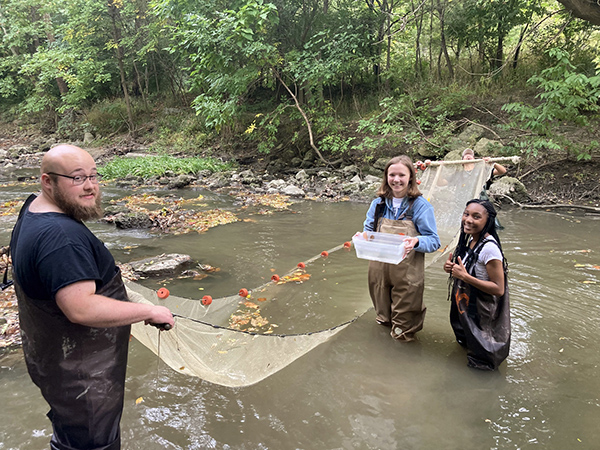
Suit up in waders and step into the Ottawa River! Students will learn proper water sampling techinques, collect scientific water samples and investigate potential sources of pollution while exploring how environmental scientists study water quality in the field. - 10:15- 11 a.m. | Lab 1: Water Quality Dectives
Back in the lab you will investigate water samples using a variety of scientific tests to measure pH, turbidity, nitrate and phosphate levels and screen for the presence of heavy metals to identify potential sources of contamination. - 11 a.m.-Noon | Lab 2: Follow the Data
Organize your findings, create simple graphs and analyze environmental data. Working in teams, you will search for patterns and identify possible causes of water quality issues. - Noon-12:35 p.m. | Lunch (provided)
- 12:35–1:35 p.m. | Lab 3: Build a Better Filter
Design, build and test your own filtration systems using a variety of materials. - 1:35-2:15 p.m. | Lab 4: GUTS Sustainability and Ecosystem Exploration
Explore how ecosystems help protect water quality through hands-on activities focused on soil, plants, stormwater management and environmental restoration while discovering how healthy ecosystems are part of the solution to water challenges. - 2:15-2:30 p.m. | Mission Briefing for Day Two
Receive your final instructions and learn how the skills you developed throughout the day will be used to solve Friday's crisis challenge!
Friday: “EcoLab Crisis Escape”
- 9:15-9:30 a.m. | Check-in
- 9:30–9:45 a.m. | Crisis Alert
Teams receive a mystery water sample linked to a unique water crisis scenario. Using the skills learned on day one, teams must investigate the sample, identify the source and type of contamination and develop a treatment strategy before time runs out. - 9:45-10:15 a.m. | Stage 1: Water Quality Analysis
Teams anaylze mystery water samples and use their testing results to unlock the next piece of the puzzle. - 10:15-10:45 a.m. | Stage 2: Follow the Evidence
Examine environmental data, maps and clues to identify the source of contamination and narrow down possible causes of the crisis. - 10:45-11:30 a.m. | Stage 3: Design, Build and Test a Solution
Teams develop a treatment strategy, build a filtration system and test its effectiveness. Successful treatment unlocks the final clues needed to solve the crisis. - 11:30-11:50 a.m. | Stage 4: Final Investigation
Using all the evidence gathered, teams identify the contamination source, explain their treatment strategy and submit their final solution before time expires. - 11:45 a.m.-Noon | Awards and Recognition
Teams are recognized for teamwork, scientific reasoning, creativity and successful crisis resolution.