
The Biomedical Science Graduate Program at The University of Toledo prepares students for an independent career in research through advanced course complemented by active participation in faculty-mentored laboratory research in one of our five BMS Research Tracks.
Tracks are organized around research themes that relate to human disease processes. They are affiliated with basic science departments but are interdisciplinary and draw faculty members with common research interests from a variety of basic science and clinical departments.
Concentration / Tracks:
The University of Toledo offers research-intensive Doctor of Philosophy (Ph.D.) and Master of Science (M.S.) degrees in Biomedical Science in four concentrations or tracks:
Want More Info?
Hear from our students
Hear directly from our graduate students:
Dual Degrees
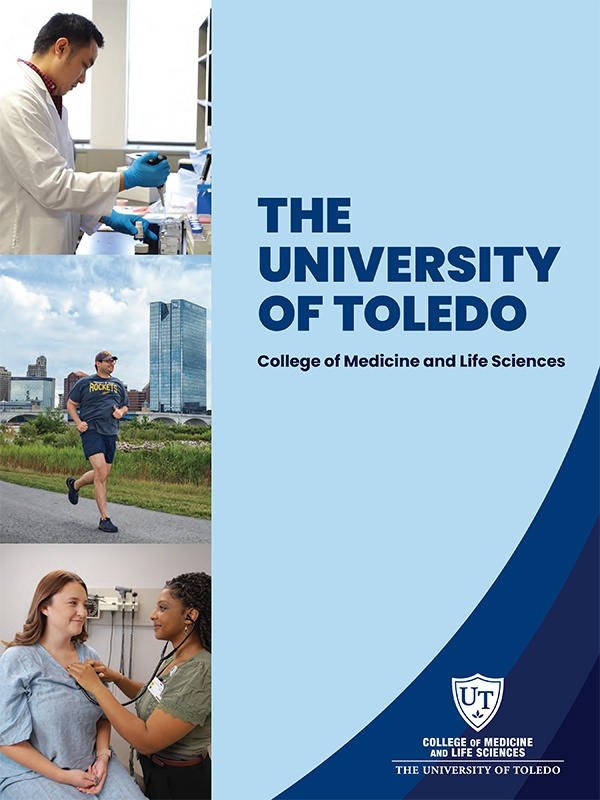
The four tracks also offer Ph.D. and M.S. in Biomedical Science degrees in combination with the Doctor of Medicine degree (M.D.) through the College of Medicine. Typically, the M.D./M.S. and M.D./Ph.D. dual degree students complete the first two years of medical school, then complete the graduate degree, and follow that with their last two years of medical school. The same financial aid described above for graduate students is available to dual degree candidates during their graduate school training. Medical school tuition scholarships also are available on a competitive basis.
Learn More About the M.D. / Ph.D. Program
See full list of Graduate Degrees available from the UToledo College of Medicine and Life Sciences.
Explore our full website using the menu at the top of the page.
Inclusion & Opportunity
The University of Toledo — and the College of Medicine and Life Sciences — is committed to an environment where every student, staff member and faculty member feels included and respected. Learn more on our Office of Inclusion and Opportunity website.
In the News
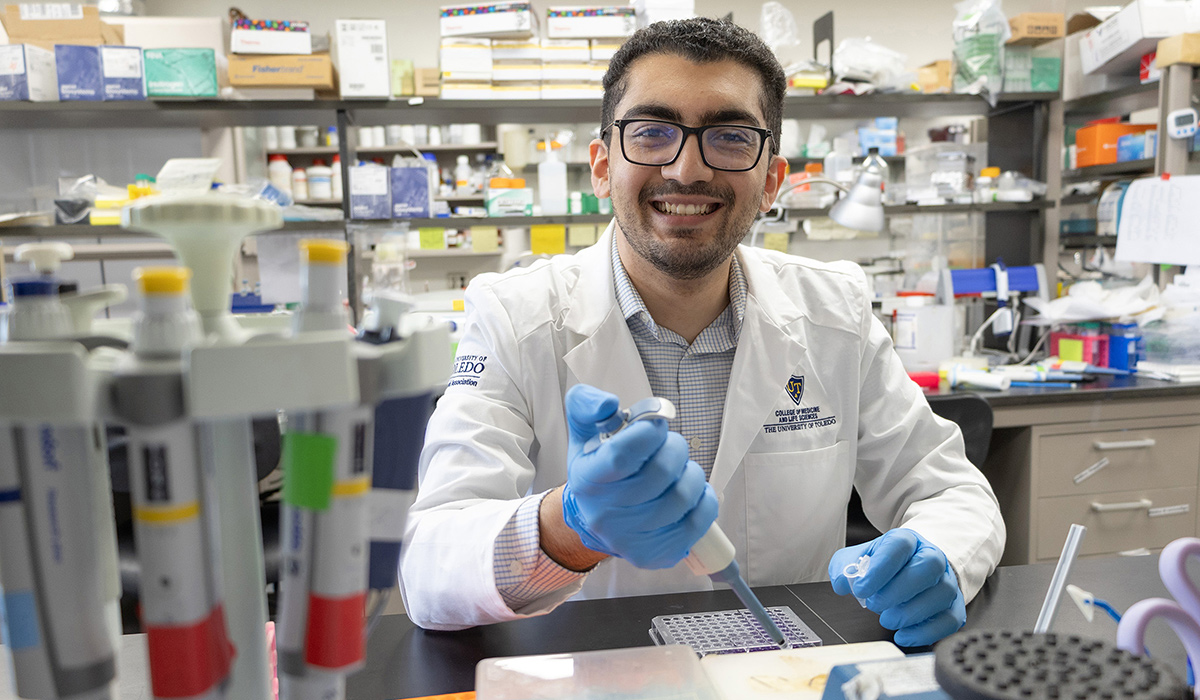
"My project is focused on finding ways to suppress heat shock factor 1 (HSF1) in pancreatic cancer. One of my key discoveries is that HSF1 helps pancreatic cancer cells survive toxic levels of copper. My plan is to pair copper therapies with drugs that block HSF1. By removing this cellular shield, even small amounts of copper become effective to kill cancer cells while normal cells, which do not rely on HSF1 in the same way, remain unharmed."
Ahmad Hegazi, an M.D./Ph.D. student in the Cell and Cancer Biology Track of our Biomedical Science Program, wrote a column in the Toledo Blade sharing his research on pancreatic cancer. He is conducting his Ph.D. research in the laboratory of Dr. Kuo-Hui Su in the Department of Cell and Cancer Biology.
Latest News
Living in Toledo, Ohio
— A Safe, Affordable City
The University of Toledo is located in Toledo, Ohio, on the western shore of Lake Erie. Nicknamed The Glass City, Toledo has the cultural amenities of a big city and the close-knit feel of a small town. We are within hours of most major Midwestern cities.
About UToledo