


Program Overview
Features of our program
- Supportive Faculty and Staff
- Family-Friendly Environment
- Well-Equipped Geriatrics Center with Radiology, Lab, and Pharmacy
- Comprehensive Primary Care
- Behavioral Health Integration/ Collaborative Care
- Excellent Library Sources
- Team-Based Care (Social Work, PharmD, RNs)
- Interprofessional Immersive Simulation Center (IISC)
- Affiliation with ProMedica Health System
- Fellowship Wellness/Resiliency
- Geriatrics Club
- Scholarly Activity
- Interest-based fellowship tracks
- IM & FM department geriatric faculty collaboration
Our fellowship program offers a strong clinical focus, with trainees providing treatment and consultation in a wide variety of settings. In addition to clinical training, there are numerous conferences, didactic activities, and research opportunities for fellows.
Clinical Experience
Clinical experience is gained in various ways: ambulatory clinic, long term care facilities,
and clinical rotations.
Fellows spend two half-days each week in the ambulatory clinic; this time allows for
one-on-one learning with the preceptor and different patient cases. In addition to
three month-long rotations in the long-term-care facilities, the fellows care for
patients with monthly continuity visits. Clinical rotations include neurology, geriatric
psychiatry, physical medicine and rehabilitation, emergency medicine, hospice and
palliative care, wound care, and two electives.
Descriptions by rotation based on goals and objectives:
|
Rotation |
Time |
Description |
|
Geriatric Ambulatory Clinic |
Two Half-Days Each Week |
Provide outpatient comprehensive care and manage common geriatric syndromes. Fellows will assess and address health problems, communicate with specialists and address advanced directives. |
|
Nursing Home |
Two Months |
During 2 one-month rotations, fellows will engage patients, comprehensively evaluate and guide treatment for short-term rehabilitation and long-term nursing home patients. Fellows will work with multiple members of the care team in a multifaceted approach to patient care in this unique setting. |
|
Physical Medicine & Rehabilitation |
One Month |
Care of patients transferred from Acute Care who can participate in aggressive rehabilitation. |
|
Geriatric Psychiatry |
One Month |
The fellow will develop skills in diagnosis, prognosis and management options for major psychiatric illnesses and severity assessment. Development of theoretical and practical understanding for major psychiatric illness, geriatric psychopharmacology, individualization of psychotherapy regarding geriatric patients. |
|
Emergency Medicine |
One Month |
Emergency care including minor surgical and critical care procedures regarding the older population. Special emphasis on transition of care from the ER to appropriate health care setting. |
|
Neurology/Movement Disorders |
One Month |
During this longitudinal rotation the fellow will work with a neurology expert in movement and gait disorders in the ambulatory clinic specialized in neurodegenerative disorders. Fellows will be actively engaged in initial assessments, diagnostic plans and development of appropriate treatment protocols. |
|
Inpatient Geriatric Medicine |
One Month |
Fellows will care for acutely ill hospitalized older patients and develop competence in the management of common geriatric syndromes. |
|
Wound Care |
One Month |
Fellows will work in the wound care clinic and in the long-term care facility to evaluate and treat wounds. Fellow will learn about prevention and care for multiple different types of wounds. |
|
Ambulatory Electives |
Two Months |
Additional electives available in pain medicine, pulmonology, Oncology, podiatry, nephrology, infections disease and more. |
Click Here to See the Various Teaching Sites
Fellowship Tracks
The program provides three fellowship tracks based on learners’ interests. Fellowship Tracks enhanced the curriculum by broadening fellows’ exposure across diverse clinical settings and prepares them to address the unique clinical, functional, and psychosocial needs of older adults while advancing innovative models of geriatric care delivery.
Trauma-Oriented Geriatric Assessment (TOGA)
This track gives enhanced exposure to an inpatient consult service designed to address
the unique needs of older adults admitted with traumatic injuries. Older trauma patients
often present with complex vulnerabilities that may not be fully captured through
standard trauma assessments.
To bridge this gap, TOGA provides a structured evaluation by clinicians with geriatrics
expertise to identify and manage geriatric-specific vulnerabilities. The program integrates
Age-Friendly Health System principles into routine inpatient trauma workflows to support
safer, more individualized care and improved outcomes.
Cancer -Oriented Geriatric Assessment (COGA)
This track gives enhanced exposure to Comprehensive Geriatric Assessments for patients aged ≥65 years undergoing cancer care at the Eleanor N. Dana Cancer Center. COGA consult integrates geriatrics into oncology care and detect important vulnerabilities such as frailty, polypharmacy, cognitive impairment, and social support needs.
These standard geriatric assessments helps to optimize treatment tolerance, reduce treatment-related toxicity, unplanned hospitalizations, and functional decline. COGA consult service structured around the 5M Geriatric framework and support age-friendly cancer care.
GUIDE Model (Guiding an Improved Dementia Experience)
The GUDE track based on GUIDE Model (Guiding an Improved Dementia Experience), introduced
by the Centers for Medicare & Medicaid Services (CMS), is an eight-year initiative
designed to improve dementia care through comprehensive, coordinated care for Medicare
beneficiaries living with dementia and support for their caregivers.
The program focuses on enabling individuals with dementia to remain safely at home
longer, while improving care coordination and reducing caregiver burden.
Research experience
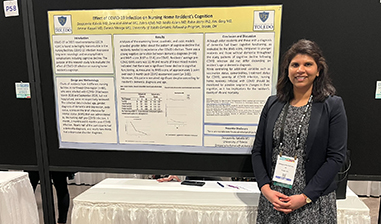 |
Dr. Kalvala presenting at the 2023 AMDA conference in Tampa, Florida |
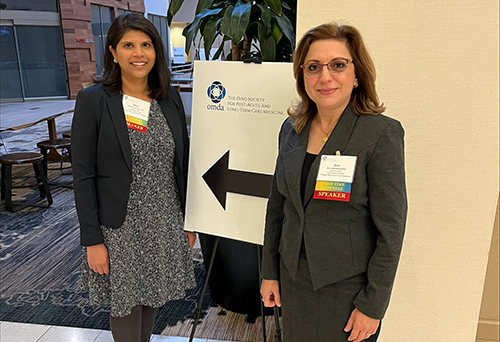 |
Dr. Abd-Alahad and Dr. Kalvala presenting at the 2022 OMDA conference in Columbus, Ohio |
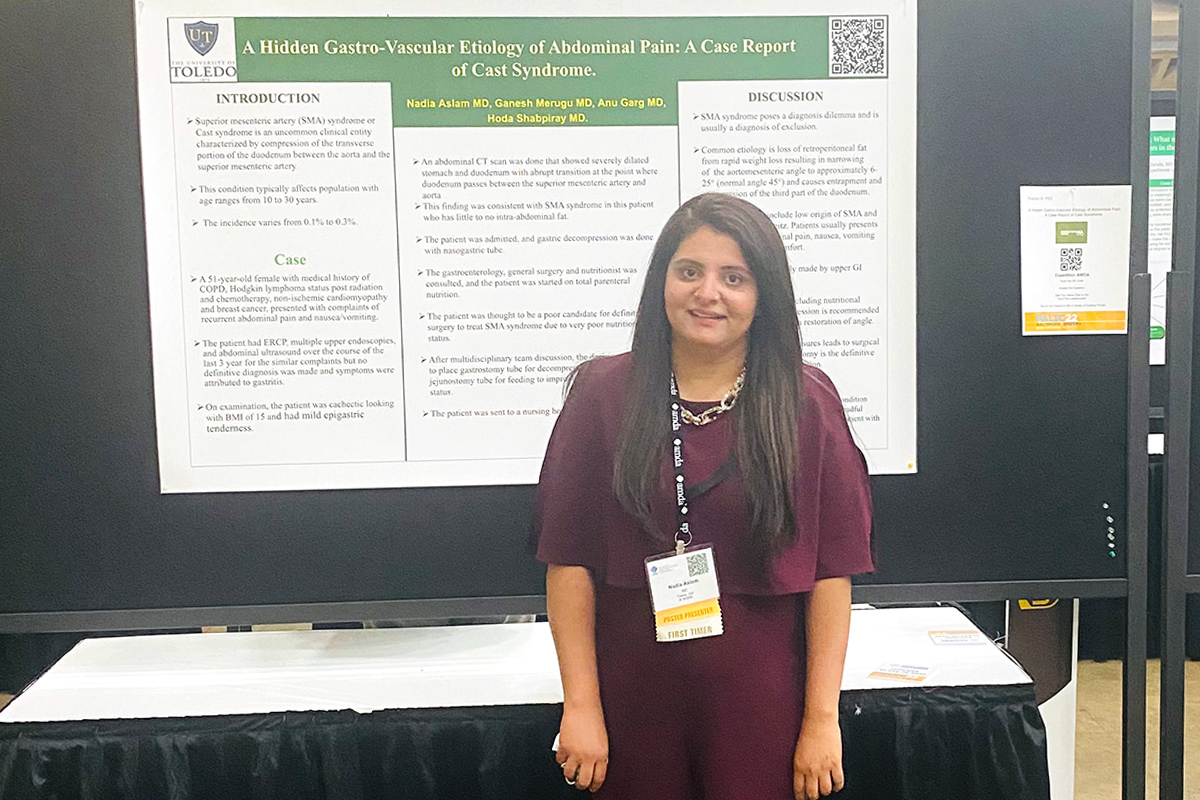 |
Dr. Aslam presented her poster at the 2022 AMDA conference in Baltimore, Maryland. |
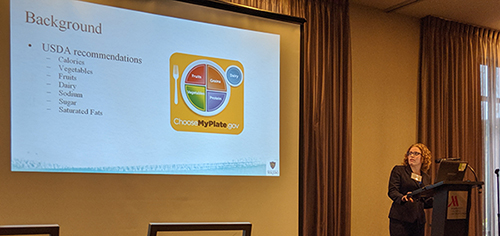 |
Dr. Szymanski presented her poster at the 2019 OMDA conference in Columbus, OH. She presented her poster at AMDA in 2020. |
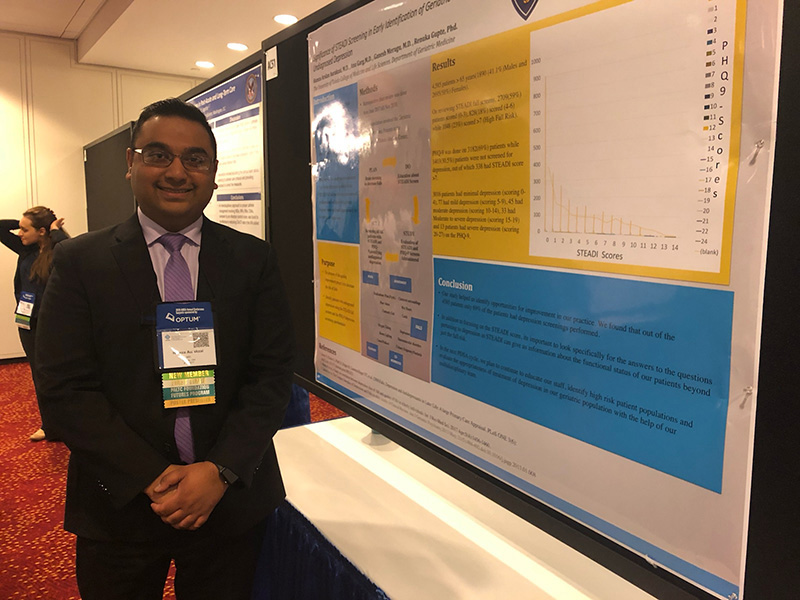 |
Dr. Aurakzai received a full scholarship, for the Futures Program (AMDA) in December 2018. He presented his poster at the 2019 AMDA conference in Atlanta, GA. |
Additional Fellow Scholarly Activity
Weekly Didactics
Weekly didactic conferences are taught by the core faculty as well as specialty-specific speakers from the UTMC community. Fellows are often joined by residents, physician assistant students, and medical students that participate in a geriatric medicine rotation. Fellows are also expected to prepare and present lectures for the junior learners to benefit from as collaboration between the learners is encouraged. Our fellowship utilizes the Blackboard Distance Learning Program offered through The University of Toledo as an excellent teaching/learning resource. Blackboard gives fellows and other learners on-line access to a variety of educational materials, tools, and resources all in one organized location. The University of Toledo Libraries have excellent resources available on-line as well; this includes but is not limited to full textbook chapters and journal articles.


Program Home Meet the Geriatric Team Faculty Teaching Sites How To Apply
UToledo Foundation Fund About Toledo Contact About the Program