


Current News and Announcements
UToledo Recognizes Distinguished Faculty Members with Highest Permanent Honor
Distinguished Professor is the highest permanent honor The University of Toledo can bestow on a faculty member. Dr. Stanislaw Stepkowski, D.V.M., Ph.D., D.Sc., has been approved by the UToledo Board of Trustees and recognizes the remarkable national and international impact Dr. Stepkowski has made through his research.
Dr. Stanislaw (Stan) Stepkowski, regarded as one of the best tissue transplantation scientists of his generation, joined the faculty at The University of Toledo’s Department of Immunology and Microbiology in 2008 and the Department of Surgery in 2009.
He is an international expert in understanding mechanisms underlying immune system responses to and minimizing immune system rejection of allografts or transplanted tissues.
In addition, Stepkowski is an extremely skilled microsurgeon, having worked under the tutelage Dr. Sun Lee, who created basic techniques of organ transplantation models in rodents. Most recently, he collaborated with Dr. Rajesh Gupta, an interventional cardiologist, to develop a modified technique of cardiopulmonary bypass in rats that serves as the basis for a pending NIH grant application.
Stepkowski contributed to the preclinical development of principle immunosuppressive compounds, including cyclosporine and rapamycin. The combination allowed for reduced concentrations and doses of these two drugs, eliminating nephrotoxicity produced by cyclosporine. The concept of two-drug therapy with different mechanisms of action remains a principle in clinical therapy.
Among his many other contributions to transplantation science, Stepkowski’s long-lasting collaboration with Dr. Micheal Rees at The University of Toledo College of Medicine promoted new concepts of live donor kidney transplantation by organizing kidney exchanges among willing donors and incompatible recipients.
“I have been very lucky to meet outstanding mentors, like Dr. Barry Kahan and others, who taught me how to develop my talent and accomplish more than I could even imagine,” Stepkowski said. “The University of Toledo allowed me to expand my research into long collaborations with outstanding clinicians, Drs. Michael Rees and Obi Ekwenna.”
Stepkowski has published 225 papers, acquiring 4500 citations in high-impact journals and was awarded numerous grants from NIH, industry and private foundations totaling more than $30 million. He has also been awarded three patents for his discoveries. He serves as editor-in-chief, associate editor or editorial board member of several journals in his field.
Additionally, he has supervised the dissertation research of more than 30 Ph.D. students and trained a similar number of postdoctoral fellows, with a number of his trainees forging illustrious careers of their own.
Stepkowski received his D.V.M. from the University of Warsaw, and a Ph.D. and D.Sc. in Immunology from the Polish Academy of Sciences in Warsaw, Poland.
Student writes about research in Toledo Blade
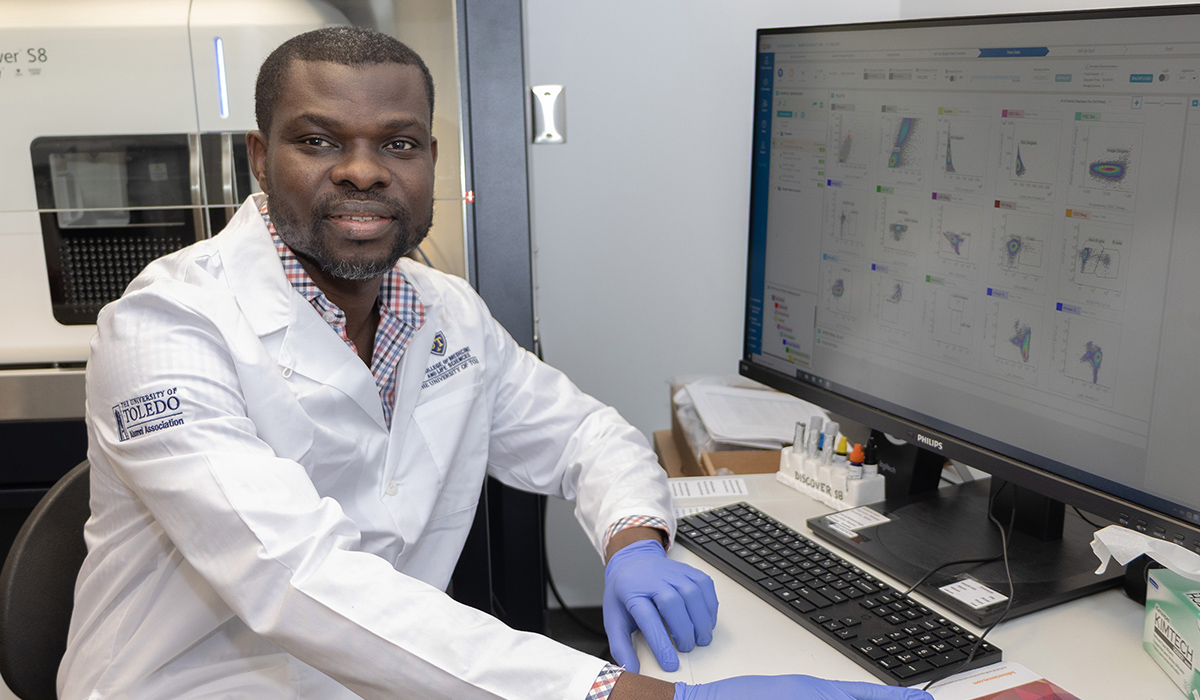
Olalekan Olatunji, a Ph.D. candidate in the Medical Microbiology and Immunology Track of our Biomedical Science Program, is conducting his research in the laboratory of Randall Worth, Ph.D., and has written a column in the Toledo Blade discussing his research on how platelets regulate immune responses during viral infections.
His research has the potential to influence therapeutic strategies that address the immune dysregulation that is characteristic of many viral infections. His research indicates that the utilization of the pathways that platelets facilitate may result in the development of therapeutic strategies that address the need for balancing immune defense and the need for controlling inflammation, particularly in the context of severe infections with a high risk of immune overreaction.
Student writes about research in Toledo Blade
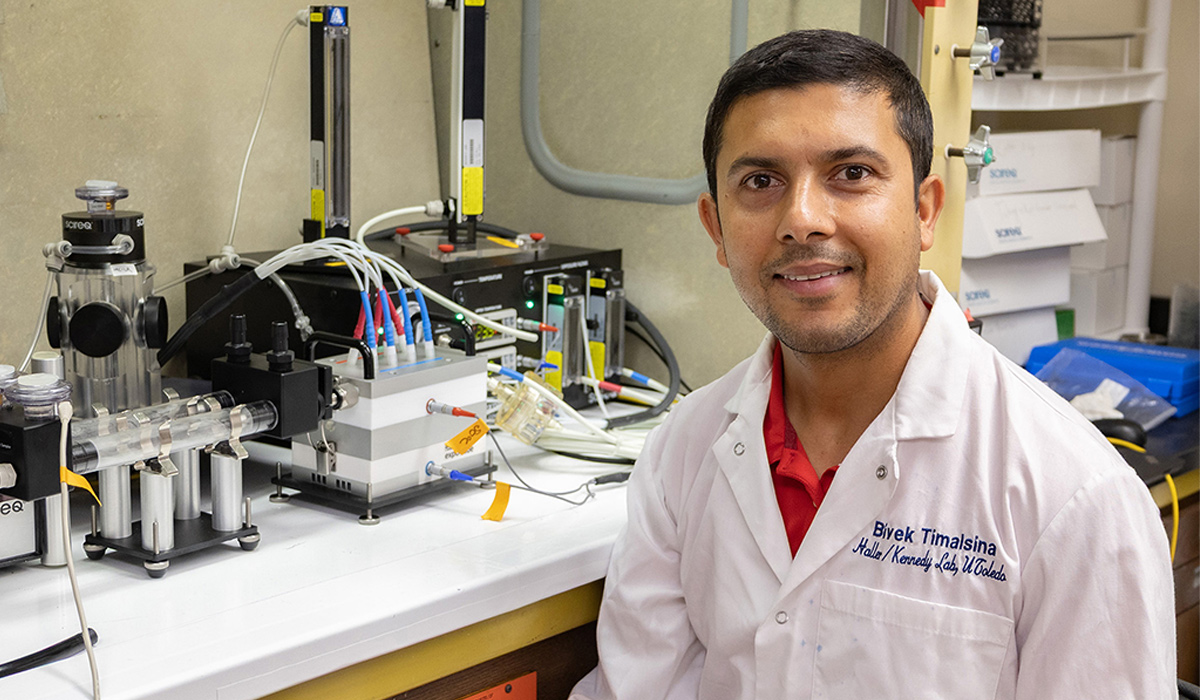
Bivek Timalsina studies for his doctorate in Medical Microbiology and Immunology at the University of Toledo. Inside labs run by Dr. Steven Haller and Dr. David Kennedy, he focuses on how air-borne poisons from toxic algae affect people. These toxins come from harmful algal blooms, often seen in Lake Erie.
His attention zeroes in on microcystins, a harmful substance made by algae that damages liver and lung tissue. Bivek studies what happens when microcystins meet airway cells and shift immune response. His work draws attention to people struggling with breathing issues such as asthma or lasting respiratory conditions. As a result, health advice could change because science can now link lake conditions directly to human tissue response. His findings show lung irritation happens when people inhale certain particles, which means safety plans should include air checks during blooms.
2026 Graduate Research Annual Forum (GRAF)
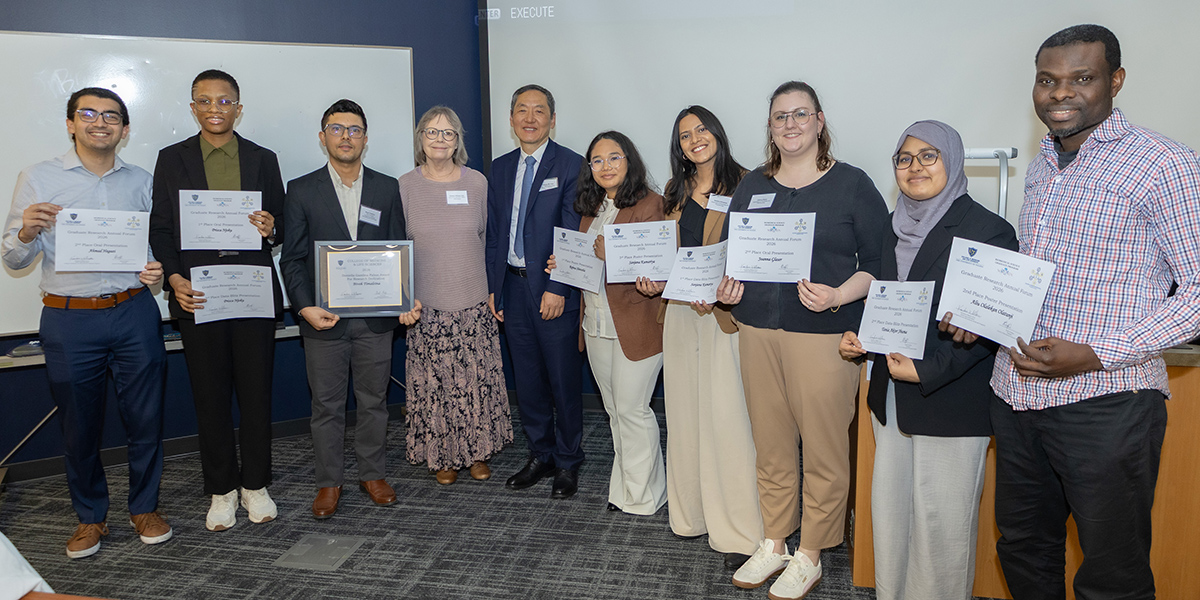
The University of Toledo’s Council of Biomedical Graduate Students held its annual Graduate Research Annual Forum on Health Science Campus Thursday, March 19 & Friday, March 20. Read more on our events page.
2025 Lab Coat Ceremony
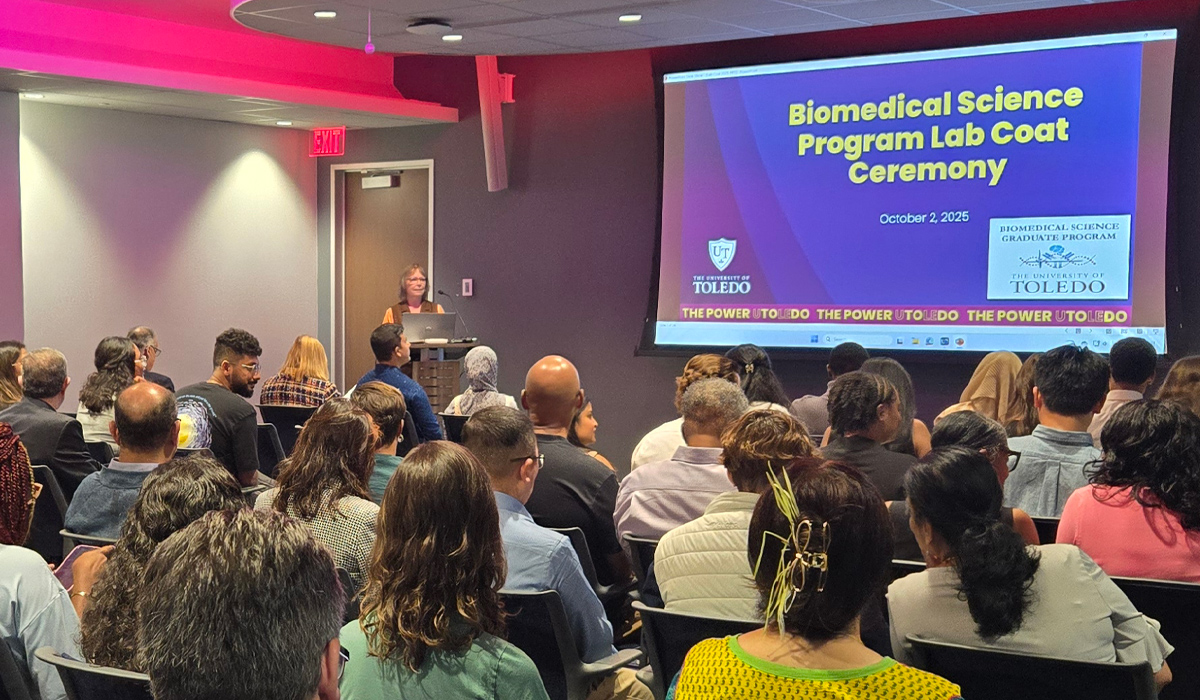
We officially welcomed our new graduate students at the recent Biomedical Science Graduate Program’s Lab Coat Ceremony. Read more on our events page.